
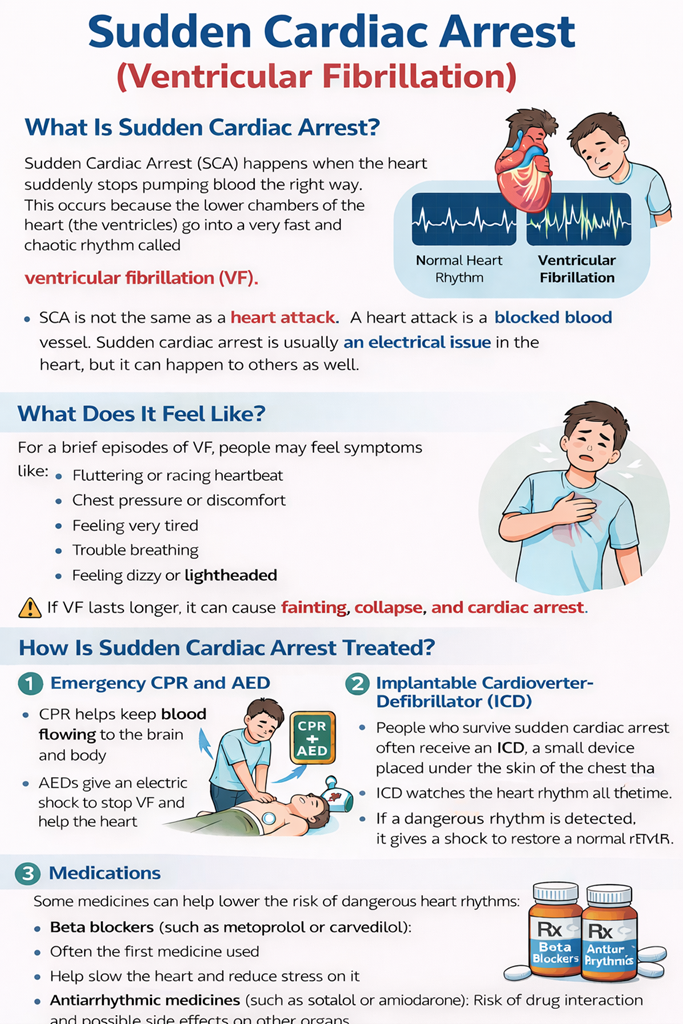
What Does It Feel Like?
If VF happens only for a short time, a person may feel symptoms like:
- A fluttering or racing heartbeat
- Chest pressure or discomfort
- Feeling very tired
- Trouble breathing
- Feeling dizzy or lightheaded
If VF lasts longer, it can cause fainting, collapse, and cardiac arrest.
How is Sudden Cardiac Arrest Treated?
- Emergency CPR and AED
- CPR helps keep blood flowing to the brain and body when the heart is not pumping.
- An AED (automated external defibrillator) can give an electric shock to stop VF and help the heart return to a normal rhythm.
- Quick CPR and AED use can save lives while waiting for emergency medical services (EMS).
- Implantable Cardioverter-Defibrillator
- People who survive sudden cardiac arrest often receive an ICD, a small device placed under the skin of the chest.
- The ICD watches the heart rhythm all the time.
- If a dangerous rhythm is detected, it gives a shock to restore a normal heartbeat.
- This helps prevent fainting, cardiac arrest, and heart damage.
- Medications
- Some medicines can help lower the risk of dangerous heart rhythms:
- Beta blockers (such as metoprolol or carvedilol):
- Often the first medicine used
- Help slow the heart and reduce stress on it
- Possible side effects: tiredness, dizziness, low blood pressure
- Antiarrhythmic medicines (such as sotalol or amiodarone):
- Help control abnormal heart rhythms
- Can sometimes slow the heart too much, so close monitoring is needed
- Amiodarone is very effective but requires regular blood tests and checkups (lungs, eyes, thyroid) due to possible side effects
- Beta blockers (such as metoprolol or carvedilol):
- Some medicines can help lower the risk of dangerous heart rhythms: