

This brochure explains the different types of Atrioventricular (AV) Blocks, which are common electrical problems of the heart.
What is an AV Block?
Your heart has a natural electrical system that controls your heartbeat. The signal starts in the upper chambers (atria) and must pass through a relay station called the AV Node (Atrioventricular Node) to reach the lower chambers (ventricles).
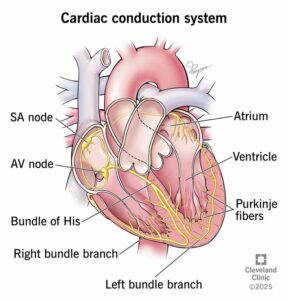
An AV Block occurs when there is a delay or interruption in this electrical signal as it travels through the AV Node or the structures just below it. Think of it like a traffic jam on the electrical pathway, slowing down or completely blocking the signal from the atria to the ventricles.
How are AV Blocks Diagnosed?
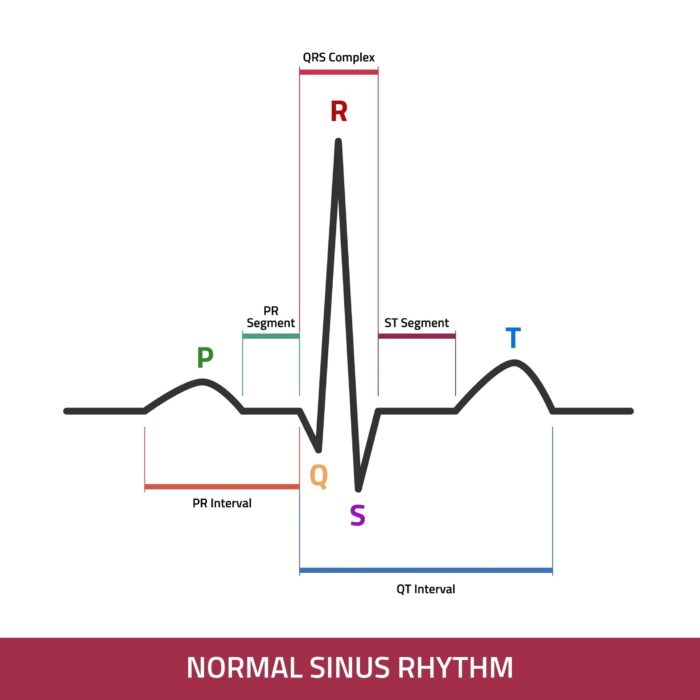
AV Blocks are diagnosed using an Electrocardiogram (ECG or EKG). This test measures the electrical activity of your heart. Doctors look specifically at the PR interval (the time it takes for the electrical signal to travel from the atria to the ventricles) and the relationship between the P wave (atrial contraction) and the QRS complex (ventricular contraction).
The Four Degrees of AV Block
AV Blocks are classified into four degrees based on the severity of the electrical conduction delay.
First-Degree AV Block
- What it is: The electrical signal is slowed down, but every signal successfully makes it from the atria to the ventricles.
-
- ECG Feature: The PR interval is consistently prolonged (longer than normal), but a QRS complex follows every P wave. 
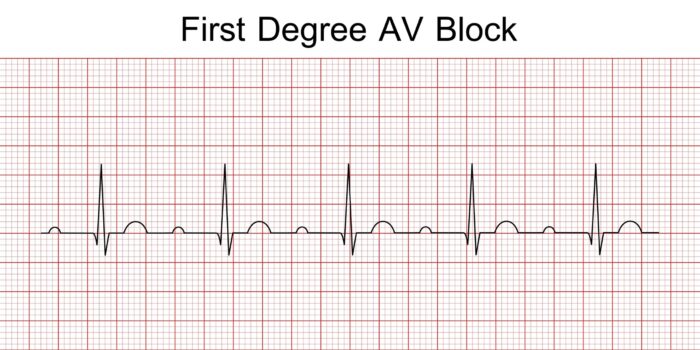
- Treatment Need: Usually requires no treatment. First-degree AV block is often considered a normal finding in healthy people. It’s only monitored to ensure it doesn’t progress.
- ECG Feature: The PR interval is consistently prolonged (longer than normal), but a QRS complex follows every P wave. 
Second-Degree AV Block, Type I (Wenckebach)
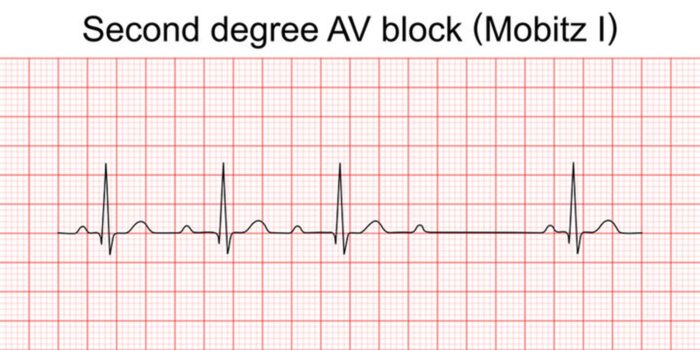
- What it is: The electrical signal from atria to AV node gets progressively slower with each beat until it is completely blocked, and a beat is dropped. Then the cycle repeats.
-
- ECG Feature: The PR interval gets progressively longer until a P wave is not followed by a QRS complex (a dropped beat). 
- Treatment Need:
- Often requires no treatment. It is usually benign (harmless) and may be monitored. This is commonly seen in otherwise healthy people during sleep.
- Treatment is needed only if it causes symptoms (like dizziness or fainting) or progresses to a more severe block.
- ECG Feature: The PR interval gets progressively longer until a P wave is not followed by a QRS complex (a dropped beat). 
Second-Degree AV Block, Type II
- What it is: The electrical signal is blocked intermittently and unpredictably at the lower part of the conduction system.
-
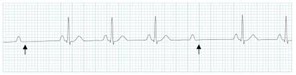
- ECG Feature: The PR interval is consistently normal (or prolonged), but some P waves are suddenly not followed by a QRS complex (dropped beats). 
- Treatment Need:
- Often requires treatment. This type of block is considered more serious because it can progress quickly to a complete (Third-Degree) AV block.
- Treatment is typically a pacemaker implant.
- ECG Feature: The PR interval is consistently normal (or prolonged), but some P waves are suddenly not followed by a QRS complex (dropped beats). 
Third-Degree (Complete) AV Block
- What it is: The electrical signal from the atria is completely blocked from reaching the ventricles. The atria and ventricles beat independently of each other. The ventricles rely on a slow, back-up “escape” rhythm to beat.
-
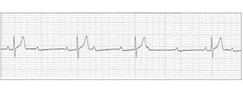
- ECG Feature: There is no relationship between the P waves (atrial beats) and the QRS complexes (ventricular beats). The atrial rate is faster than the ventricular rate. 
- Treatment Need: Immediate treatment is almost always required. This condition can lead to very slow heart rates, fainting, and heart failure.
- ECG Feature: There is no relationship between the P waves (atrial beats) and the QRS complexes (ventricular beats). The atrial rate is faster than the ventricular rate. 
Treatment Options for AV Block
Treatment is based on the type of block, the symptoms you are experiencing, and your underlying health.
- Observation/Monitoring
- Used for: Most First-Degree and often asymptomatic Second-Degree Type I blocks.
- What it is: Your doctor will regularly check your ECG and monitor you for symptoms. No invasive procedure or medication is necessary.
- Medications
- Used for: Short-term stabilization or treating temporary causes.
- What it is: Sometimes, IV medications like atropine or epinephrine are used in an emergency setting to temporarily speed up the heart rate until a long-term solution (like a pacemaker) can be implemented.
- Pacemaker Implantation
- Used for: Most Second-Degree Type II and all symptomatic Third-Degree AV blocks.
- What it is: A pacemaker is a small device surgically implanted under the skin near the collarbone. Wires run from the device to the heart.
- The pacemaker constantly monitors your heart’s rhythm.
- If your heart rate drops too low or a beat is missed, the pacemaker sends a safe electrical impulse to the heart to ensure it beats at an appropriate rate.
When to Seek Medical Attention
Contact your doctor or seek emergency care if you experience symptoms like:
- Dizziness or Lightheadedness
- Fainting (Syncope)
- Extreme Fatigue or Weakness
- Shortness of Breath
- Difficulty increasing heart rate with exertion/exercise